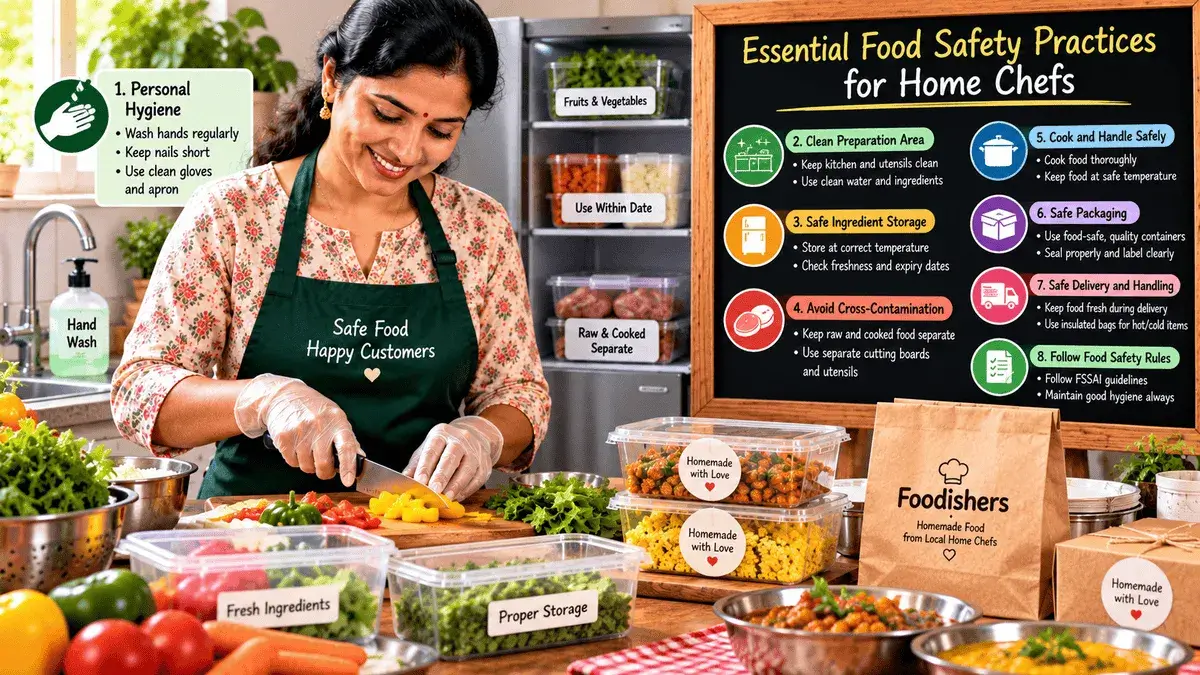
Start with Personal Hygiene
Wash your hands with soap and clean running water before handling food and whenever they may have become contaminated—for example, after using the toilet, handling waste, touching raw ingredients or cleaning surfaces. Dry hands hygienically and keep nails and hands clean while preparing food.
Keep hair secured and wear clean clothing or an apron. Cover cuts with a suitable waterproof dressing and avoid preparing food for others when you are ill with symptoms that could contaminate food. Avoid touching ready-to-eat food unnecessarily, and use clean utensils or suitable food-handling practices.
Food safety is a process, not a final check. Pay attention during purchasing, storage, preparation, cooking, packing and delivery.
Keep Preparation Areas and Equipment Clean
Clean Work Surfaces
Clean and, where appropriate, sanitise counters and food-contact surfaces before preparation and between tasks. Keep cleaning chemicals away from food and utensils.
Wash Utensils Properly
Use clean knives, chopping boards, vessels and serving tools. Wash them between different tasks and allow them to dry or store them hygienically.
Use Safe Water
Use potable water for washing ingredients, making ice, cooking and cleaning food-contact equipment. Keep water containers clean and covered.
Control Pests and Waste
Keep ingredients covered, dispose of waste regularly and maintain a clean area that discourages insects and rodents.
Buy and Store Ingredients Carefully
Choose ingredients from reliable sources and check packaging, dates and condition before use. Avoid ingredients that show signs of spoilage or damaged packaging. Store dry goods in clean, dry, covered containers and keep them protected from moisture and pests.
Refrigerate ingredients that require cold storage and avoid leaving perishable food out for long periods. Keep the refrigerator clean and organised, and follow suitable temperature guidance for the foods you handle. Use stock rotation so older suitable ingredients are used first, while never using food that is unsafe or past a relevant use-by date.
Prevent Cross-Contamination
Cross-contamination can happen when harmful microorganisms or allergens move from one food, surface or utensil to another. Separate raw ingredients from cooked and ready-to-eat foods, and use different or thoroughly cleaned equipment for tasks that could transfer contamination.
- Store raw foods securely below ready-to-eat items where appropriate, so drips cannot contaminate them.
- Wash hands and clean utensils after handling raw meat, poultry, seafood or eggs.
- Keep cooked food away from unwashed produce and raw ingredient containers.
- Use separate, clean tools for allergen-sensitive preparation where possible, and communicate accurately about ingredients and cross-contact risks.
- Do not place cooked food back on a plate or surface that held raw food unless it has been properly cleaned.
Cook Food Thoroughly and Handle It Safely
Cook foods thoroughly using suitable methods for the ingredients and dish. A food thermometer can help verify the internal temperature where appropriate; colour or appearance alone may not reliably show that food is safely cooked. Avoid partially cooking food and leaving it to finish much later unless you are following a validated safe process.
Serve or pack cooked food promptly, or hold it under suitable hot or cold conditions. Cool leftovers that are intended for later use promptly and safely, refrigerate them in suitable containers and reheat them thoroughly when appropriate. Follow recognised food-safety temperature and time guidance rather than relying on guesswork.
Pack Orders with Food Safety in Mind
Use clean, food-contact-safe packaging suited to the dish's temperature and moisture. Keep containers protected before use, close them securely and avoid touching the inside surfaces or food-contact areas. Separate items when needed to prevent spills or cross-contamination.
For deliveries, consider travel time and whether the food needs temperature control. Use suitable insulated carriers where required, keep orders protected from dust and other contamination, and provide customers with accurate storage and serving instructions for perishable dishes.
Pay Attention to Allergens
Know the ingredients used in each dish and communicate them accurately when asked. Common allergens may include milk, eggs, wheat, peanuts, tree nuts, soy, sesame, fish and crustaceans, among others. Ingredient lists and allergen requirements can vary by product and applicable rules.
If a customer reports an allergy, do not promise that a dish is allergen-free unless your ingredients and preparation process support that claim. Shared equipment, surfaces and storage can create cross-contact risks. If you cannot safely meet a request, explain that clearly before accepting the order.
Keep Simple Records and Follow Applicable Rules
Maintain useful records of ingredient sources, purchase dates, cleaning routines, storage checks and order details as appropriate for your operation. Records can help you identify a problem and improve your process. Establish a routine for checking equipment, reviewing hygiene practices and training anyone who helps with preparation or packing.
Food businesses must follow the food safety and licensing requirements that apply to their activity and location. Check current guidance from the relevant authorities, including applicable FSSAI requirements in India, rather than relying on informal advice alone.
Make a Daily Food Safety Checklist
- Are hands, clothing, work surfaces and utensils clean?
- Are ingredients in good condition and stored appropriately?
- Are raw and ready-to-eat foods separated?
- Have foods been cooked, held, cooled and reheated safely where relevant?
- Are packaging materials clean, suitable and protected before use?
- Are allergen details and customer instructions accurate?
- Can the order be transported under appropriate conditions?
Food Safety for Foodishers Home Chefs
Home chefs who list food through Foodishers should build safe handling into every stage of their routine. Keep menu descriptions accurate, confirm ingredient questions honestly, use suitable packaging and ensure that the number of orders accepted does not exceed your ability to prepare and handle them safely.
These general practices support safer food handling, but they do not replace formal training, local requirements or dish-specific guidance. Consult reliable food-safety sources when you need exact time and temperature limits for a particular food.
Make Food Safety Part of Every Order
Review your hygiene, storage, preparation and packing routines regularly to protect customers and your business.
Explore Becoming a Home Chef