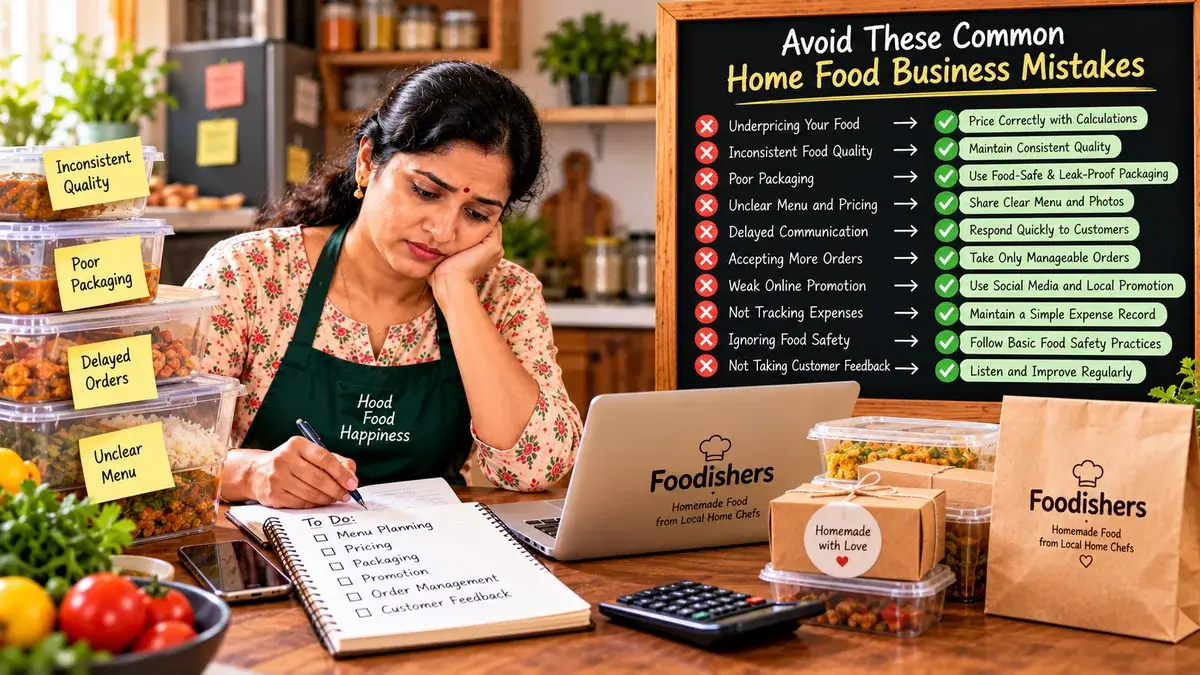
Build Reliable Habits Before Trying to Grow
It can be tempting to focus only on getting more orders. However, a larger number of orders is helpful only when you can fulfil them at the promised quality and time. Start by understanding your costs, standardising your recipes, maintaining a manageable menu and setting clear order cut-off times.
You do not need a complicated system. A notebook or spreadsheet that records orders, ingredient costs, customer requests and feedback can help you identify repeated problems and make better decisions.
Growth should match your capacity. It is better to fulfil a manageable number of orders reliably than to accept more than you can prepare well.
Common Mistakes and How to Avoid Them
1. Setting Prices by Guesswork
Pricing only by looking at competitors or ingredient costs can leave out labour, packaging, utilities, waste and selling expenses. Calculate the full cost of a batch and divide it by the number of saleable portions before setting your price.
2. Changing Portion Sizes
Customers need a reasonable idea of what they will receive. Standardise serving sizes and use consistent containers or measures. If a portion or recipe changes, update the description and price where needed.
3. Inconsistent Taste or Quality
Record ingredient quantities and cooking steps for dishes you sell regularly. Check ingredients before preparation and use a repeatable process so customers receive a consistent product.
4. Using Unsuitable Packaging
Weak lids, mixed wet and dry items, or packaging that traps steam can lead to spills and poor texture. Choose food-safe packaging suited to each dish and test it before using it for customer orders.
5. Keeping Menus Unclear
Missing prices, vague quantities or outdated availability create unnecessary questions. State the dish, portion, price, ordering deadline and pickup or delivery details clearly.
6. Responding Too Late
Customers need timely confirmation and updates. Set realistic response times, confirm the order details and tell customers promptly if availability or timing changes.
7. Accepting Too Many Orders
Estimate how many portions you can prepare with your available time, equipment and help. Set a daily limit or advance-order deadline and pause orders when capacity is reached.
8. Promoting Without a Plan
Posting irregularly or sharing incomplete offers can confuse potential customers. Use a manageable schedule and make every promotion accurate, including price, availability and the area you serve.
9. Ignoring Customer Feedback
Repeated comments about portion size, packaging or communication can reveal a process that needs improvement. Listen calmly, look for patterns and make changes that are practical for your business.
10. Not Tracking Money
Record sales, ingredient purchases, packaging, delivery-related expenses and other costs. Sales revenue is not the same as profit; regular records help you understand what the business actually earns.
11. Making Promises You Cannot Keep
Avoid guaranteeing delivery times, menu availability or custom requests until you have checked the details. Set expectations clearly and communicate early when a change is unavoidable.
12. Overlooking Food Safety
Keep preparation areas and equipment clean, store ingredients appropriately and handle cooked food carefully. Follow the food-safety requirements that apply to your operation and seek reliable guidance when unsure.
Make Your Menu Easier to Manage
A very large menu can increase ingredient waste and make preparation harder, especially when orders are unpredictable. Begin with dishes you can prepare consistently and source ingredients for reliably. Add new items after you understand their cost, preparation time, storage needs and likely demand.
Consider a rotating menu if some dishes take more time or use seasonal ingredients. Make availability clear and give customers enough notice for advance orders or special requests.
Create a Simple Order Routine
A consistent routine helps prevent forgotten items and last-minute confusion. For each order, record the customer's selected dishes, quantities, agreed price, required time and any confirmed special instructions. Check the order against the packing list before dispatch or pickup.
- Set a clear time after which same-day orders are not accepted.
- Confirm the total and any delivery or pickup arrangement.
- Plan ingredient preparation according to confirmed orders.
- Keep customers informed if a delay or change occurs.
- Review missed items or complaints and adjust the process.
Use Feedback to Improve, Not Just to Apologise
If a customer reports a problem, listen to the specific concern and respond politely. When appropriate, explain what you can do to resolve it. Then look for the cause: was the portion unclear, was an item missed during packing, or did the delivery arrangement need better coordination?
Do not pressure customers to leave positive reviews or publish their feedback without permission. Honest feedback is most useful when it helps you improve the product and service.
Review Your Business Once a Week
Choose a regular time to review a few basic measures: number of enquiries, confirmed orders, sales, main expenses, waste, customer feedback and time spent preparing food. You can then decide whether to adjust prices, remove a difficult menu item, improve packaging or change your order limits.
Make one or two realistic improvements at a time. Small changes that you can maintain are often more useful than a long list of plans that never becomes part of your routine.
Growing Your Home Food Business with Foodishers
Foodishers helps customers discover homemade food sellers. Keep your seller details, menu, prices and availability accurate, and ensure that your preparation and fulfilment routines match the orders you accept. Use the platform's current guidance for seller information and customer communication.
A dependable business is built not only on promotion but also on clear expectations, thoughtful preparation, suitable packaging and consistent service.
Build Better Habits, One Step at a Time
Review your pricing, standardise your process and choose an order volume you can fulfil reliably.
Explore Becoming a Home Chef