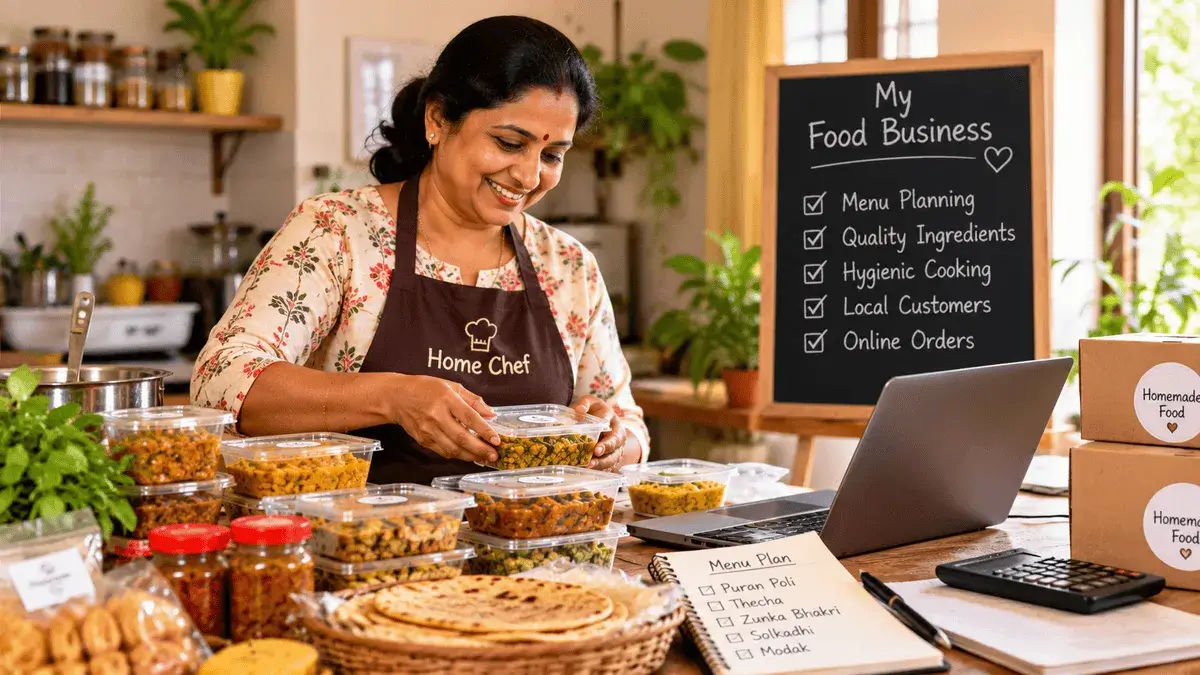
Start with the Food You Make Best
You do not need to offer dozens of dishes on your first day. Begin with a few items you prepare confidently and can make consistently. These might be snacks, sweets, everyday meals, regional specialities or products with a suitable shelf life.
Ask potential customers what they would like to order and how often. Use their feedback to refine your menu instead of investing heavily before you understand demand.
A practical beginning is better than a large menu you cannot manage. Test a few products, learn from customers and expand when your process is reliable.
7 Steps to Start a Homemade Food Business
1. Choose Your Menu
Select a small group of dishes you can prepare well, with repeatable taste, portion sizes and quality.
2. Calculate Every Cost
Include ingredients, cooking fuel, packaging, your time, delivery and platform or payment charges when setting prices.
3. Check Applicable Rules
Find out which food-business registrations, licences, labelling and local requirements apply to your business and products before selling.
4. Plan Food Safety
Keep preparation areas clean, store ingredients appropriately, prevent cross-contamination and provide clear storage instructions when needed.
5. Choose Suitable Packaging
Use food-grade packaging that suits the product, protects it during transport and communicates necessary product information.
6. Set Order and Delivery Rules
Define order cut-off times, preparation capacity, delivery or pickup areas, payment terms and cancellation expectations.
7. Find Your First Customers
Start with your community, customer referrals and clear photos and descriptions. Collect feedback and seek permission before sharing customer testimonials.
Price Your Food with Care
Pricing only by looking at competitors can leave out important costs. Work out the cost of each portion, including ingredients, packaging, utilities, preparation time and any selling or delivery fees. Then set a price that customers can understand and that makes the work sustainable for you.
Keep a simple record of sales, expenses, waste and repeat orders. Review the numbers regularly so you can identify which products are worth continuing.
Food Safety and Compliance Matter
Customers trust you with food they will eat, so hygiene and safe handling should be part of the business from day one. Use clean equipment, safe water and appropriate storage temperatures, and keep raw and ready-to-eat foods separate where needed.
Food-business requirements depend on your activity, scale and location. In India, check the current requirements with FSSAI and the relevant local authorities before you begin. Do not assume that a home-based business is automatically exempt.
Promote Your Homemade Food Business
- Use clear photos: Show the actual product in good light and keep images representative of what customers receive.
- Write useful descriptions: Mention ingredients where appropriate, portion size, price and order lead time.
- Share availability: Tell customers which items are available and when orders close.
- Build trust: Respond politely, communicate delays early and handle feedback professionally.
- Encourage repeat orders: Keep quality consistent and make reordering straightforward.
Grow at a Manageable Pace
As orders increase, review how much you can prepare without compromising quality or safe handling. Keep track of your most popular products, plan ingredient purchases and avoid accepting more orders than you can fulfil on time.
A sustainable homemade food business grows through reliable products, transparent pricing and customer trust—not just through a large menu or frequent promotions.
Explore Foodishers
Foodishers helps customers discover home chefs and homemade food sellers. If you are exploring ways to make your food visible to more people, learn about the available platform options and review the applicable terms before deciding whether they suit your business.
Ready to Take the First Step?
Choose one or two products, calculate your costs and ask potential customers for feedback. A small, well-planned start can help you learn what works before you expand.
Explore Home Chef Registration