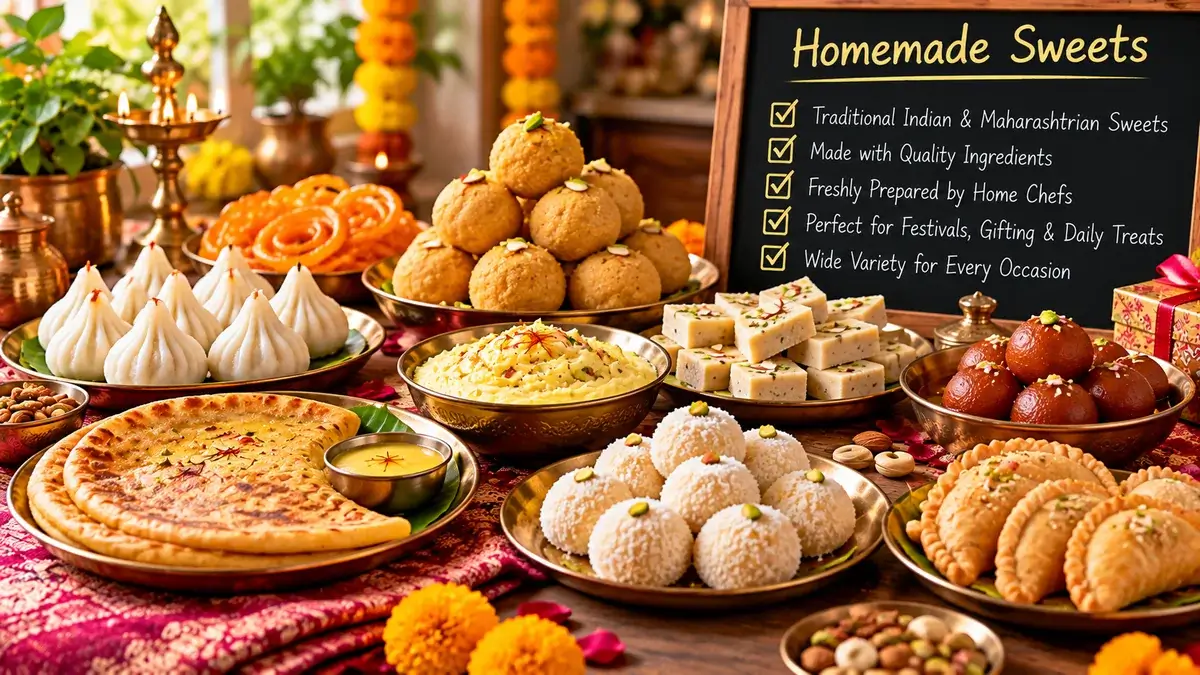
Why Homemade Sweets Feel Special
Many sweet recipes are passed between generations, with each family developing its own proportions, texture and finishing touches. The same sweet may be soft or firm, lightly flavoured or rich, and shaped differently depending on the recipe and occasion.
Homemade sweets can also be prepared in small batches for a festival, family gathering or personal craving. When ordering, it is useful to ask about the preparation date, ingredients, quantity and storage guidance because these details can differ between sweets.
Every sweet has its own recipe and shelf life. Ask the maker about ingredients, freshness and storage instead of assuming all sweets can be kept for the same length of time.
Maharashtrian Sweets and Festive Favourites
Modak
Modak is closely associated with Ganesh festival celebrations. Versions may have a steamed rice-flour shell with a coconut-jaggery filling or be prepared in other styles, depending on family tradition.
Puran Poli
A flatbread filled with a sweet lentil mixture, often flavoured with cardamom or nutmeg. It is enjoyed during festivals and family occasions, with recipes varying by region.
Besan Ladoo
Made with roasted gram flour, sweetener and fat such as ghee, besan ladoo is shaped into small portions. Roasting and ingredient proportions affect its aroma and texture.
Rava Ladoo
A semolina-based sweet that may include coconut, nuts or cardamom. Texture and sweetness vary according to the household recipe.
Shrikhand
A thickened, sweetened yoghurt preparation that may be flavoured with saffron, cardamom or fruit. It generally needs appropriate refrigeration.
Karanji
A crisp pastry filled with a sweet mixture that can include coconut, sugar or jaggery, nuts and aromatic spices. It is popular in festive food traditions.
Kheer or Payasam
Milk- or plant-based preparations with rice, vermicelli or other ingredients, depending on the recipe. These moist sweets require careful storage.
Regional and Seasonal Sweets
Across India, local ingredients and traditions shape sweets made for harvests, weddings, festivals and everyday sharing. Ask a home chef which regional recipes they specialise in.
Ingredients That Shape the Taste
Common sweet-making ingredients include jaggery, sugar, coconut, milk, ghee, gram flour, semolina, rice flour, lentils, nuts and aromatic spices. Not every sweet contains all of these, and substitutions or family preferences can change a recipe considerably.
If you have food allergies or dietary requirements, confirm the ingredients directly with the maker. Sweets may contain dairy, gluten, peanuts, tree nuts or other allergens, and shared preparation spaces can also matter.
Choose Sweets for the Occasion
For a festival or family gathering, consider how many people will be served, whether you want individual portions and how the sweets will be transported. Dry sweets and moist sweets can have different storage needs, so the best choice depends partly on the time between preparation and serving.
- For gifting: Ask about box sizes, packaging and whether the sweets travel well.
- For a gathering: Estimate the number of servings and confirm the quantity before ordering.
- For festive traditions: Check whether the specific sweet is available on your preferred date.
- For dietary needs: Ask about ingredients, allergens and possible substitutions.
Questions to Ask Before Ordering Homemade Sweets
A few simple questions help you choose confidently and avoid surprises.
- When will the sweets be prepared?
- What ingredients and allergens are included?
- What is the quantity or approximate serving count?
- How should the sweets be stored, and how soon should they be consumed?
- What packaging, delivery or pickup options are available?
- Does the seller need advance notice for larger or festive orders?
Freshness, Packaging and Storage
Different sweets have different storage requirements. Milk-based and other moist preparations may need refrigeration and a shorter consumption window than some dry sweets. Follow the maker's specific instructions, keep food protected during transport and avoid leaving perishable items unrefrigerated for extended periods.
For gifting or travel, ask the maker whether the packaging is suitable for the journey and whether temperature control is needed. Do not rely on appearance or smell alone to decide whether food has been stored safely.
Discover Homemade Sweets with Foodishers
Foodishers helps customers discover homemade food sellers and home chefs. Some sellers may offer traditional sweets, festive batches or made-to-order items, but menus and availability vary. Check current listings and confirm ingredients, quantity, price, preparation timing and delivery or pickup arrangements directly before placing an order.
Exploring home chefs can be a way to discover family-style versions of familiar sweets as well as regional treats you may not have tried before.
Find a Sweet for Your Next Occasion
Explore available homemade food listings and see which sweets and festive treats local food makers are offering.
Explore Food on Foodishers