Start with Your Real Weekly Routine
Useful meal planning starts with your calendar, not an idealised menu. Consider work hours, school or college schedules, travel, family commitments and the days when you have less time to cook. Plan simpler meals for busy evenings and leave room for a more involved dish when you have time.
You do not need to plan every bite of every day. Begin by deciding the main lunch or dinner options for the week, then add breakfast and snacks if that helps your household. A flexible plan is easier to maintain than a strict one that does not fit real life.
Plan the meals that cause the most daily stress first. Even deciding three or four main dishes in advance can make the rest of the week easier.
Build a Balanced and Varied Menu
Try to rotate different grains, vegetables, pulses and sources of protein according to your household's preferences and dietary needs. A menu can include familiar home-style dishes alongside something new, while making use of ingredients that appear in more than one meal.
Keep Familiar Staples
Plan meals your household already enjoys, such as dal and rice, bhaji with chapati or bhakri, khichdi, or a simple vegetable preparation.
Add Variety Gradually
Change one component at a time: try a different seasonal vegetable, pulse, grain or regional recipe rather than rebuilding the entire menu.
Match Meals to Your Day
Keep quick options for busy days and reserve dishes requiring more preparation for days when time is available.
Allow for Preferences
Account for vegetarian choices, allergies, spice preferences and other household needs before finalising a menu.
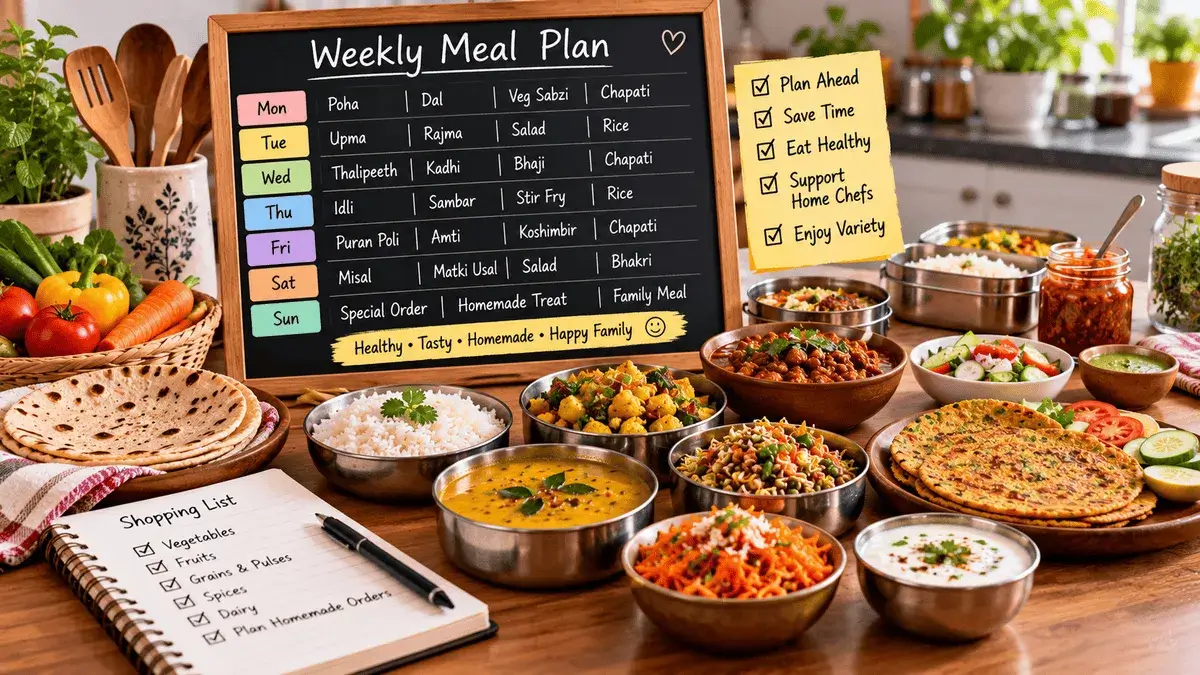
Example of a Flexible Weekly Meal Plan
Use this sample as a starting point, not a rule. Replace any dish with a familiar family recipe or a suitable option available from a local home chef.
| Day | Lunch or Dinner Idea | Planning Note |
|---|---|---|
| Monday | Dal, rice and seasonal bhaji | Use ingredients already in the kitchen. |
| Tuesday | Bhakri or chapati with pithla and vegetables | Keep the menu simple for a busy day. |
| Wednesday | Khichdi with a side dish or curd if suitable | Choose a meal that needs little preparation. |
| Thursday | Home-style usal with bread or chapati | Prepare or order the main dish ahead if needed. |
| Friday | Seasonal vegetable curry with rice or roti | Use up vegetables that need to be cooked soon. |
| Saturday | A favourite regional dish or homemade special | Allow time for a recipe that takes longer. |
| Sunday | Family-choice meal or planned leftovers | Review what worked before planning the next week. |
Create a Shopping and Preparation List
Once the menu is sketched out, check your pantry and refrigerator before buying anything. Group the remaining items into categories such as vegetables, grains, pulses, dairy or alternatives, spices and snacks. This helps prevent duplicate purchases and makes shopping more focused.
- Check what you already have: Start with pantry staples and ingredients that should be used soon.
- Reuse ingredients sensibly: If a vegetable or herb is used in two meals, plan quantities so it stays fresh.
- Prepare small tasks ahead: Wash produce, portion dry ingredients or make a menu note when convenient.
- Keep a backup option: Have a quick meal idea for days when plans change unexpectedly.
Where Homemade Food Orders Can Fit
Meal planning does not mean every meal must be cooked at home. You might prepare breakfast and simple dinners yourself, while ordering a particular lunch, snack or regional dish from a home chef on a busy day. Some sellers offer daily menus, scheduled items or dishes that need advance notice; options vary by seller.
If you plan to order, confirm the menu, portion size, ingredients, price, preparation time and delivery or pickup details. For a recurring need, ask the seller which days particular items are available rather than assuming the same menu will be offered every day.
Store Food Safely and Use Leftovers Thoughtfully
Plan quantities with your household's appetite in mind, and refrigerate perishable food promptly using safe food-handling practices. Keep raw and cooked foods separate, follow storage guidance for each dish and reheat leftovers thoroughly when appropriate. If you are unsure how long a food has been stored safely, do not rely on smell alone to decide whether it is safe to eat.
Leftovers can be included in the next day's plan when they have been stored and handled safely. Write down what needs to be eaten first so it does not get forgotten at the back of the refrigerator.
Review and Improve Your Plan Each Week
At the end of the week, take a few minutes to see which meals were convenient, which ingredients went unused and where you needed a backup. Keep the parts that worked and adjust only what caused trouble. Your meal plan should support your routine, not become another source of pressure.
- Which meals were easiest to prepare or order?
- Did you buy more produce than you could use?
- Were portions suitable for the household?
- Which days would benefit from ordering ahead?
- What would you like to repeat or try next week?
Explore Homemade Food with Foodishers
Foodishers helps customers discover home chefs and homemade food sellers. Browse available listings to see which meals, snacks or regional specialities fit your plans. Menus, prices and availability depend on each seller, so check the current details and confirm your order before relying on a dish for a particular day.
Make Your Next Week Easier
Start with a simple menu, keep it flexible and explore homemade food options when they suit your schedule.
Explore Food on Foodishers