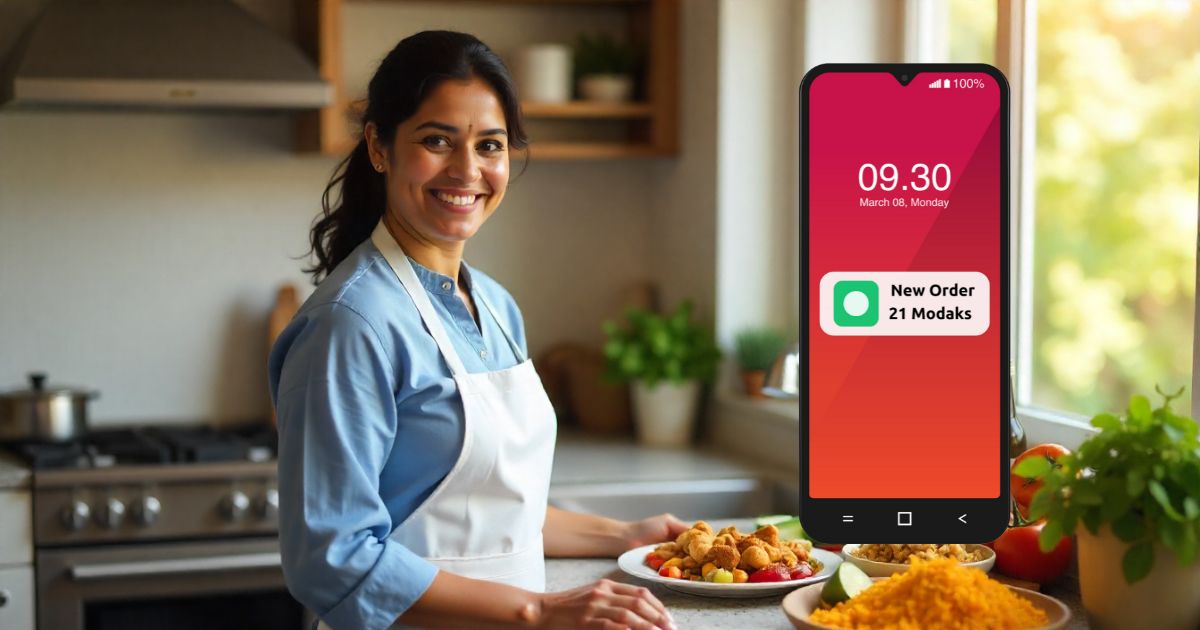
Many people in 2026 want to earn from home but feel confused about where to start. An online food business is one of the easiest and most flexible options — especially if you already cook daily for your family. You don’t need a big restaurant, a shop or a huge team. With a home kitchen, clear planning and the right online support, you can slowly turn your cooking into a stable income.
Why Online Food Business is Booming in 2026
The way people eat and order food has changed in the last few years. Office employees, students, working couples and even senior citizens are now comfortable ordering food online. At the same time, many people are tired of oily, heavy restaurant food and are looking for simple, homely meals.
- More people order daily food online – lunch, snacks, evening meals.
- High demand for homemade food – especially thalis, chapati–sabzi and simple curries.
- Digital payments are easy – UPI, QR codes and wallets make transactions simple.
- Online platforms handle visibility – you don’t have to spend heavily on ads.
- Low investment – you can start from your existing home kitchen.
For many people, online food business is not just about money. It is also about using their cooking talent, building confidence and creating something of their own.
Easy Online Food Business Ideas You Can Start From Home
Here are some simple ideas you can begin with. You don’t need to try everything at once. Start with one idea that matches your lifestyle, kitchen capacity and interest.
1. Daily Homely Lunch Boxes
One of the most popular and practical options is to offer daily lunch boxes — especially for office employees, bachelors and students. A simple veg thali with chapati, sabzi, dal and rice is enough to start.
- Offer a fixed menu (for example, only veg thali).
- Decide a clear cut-off time for orders. <
- Limit maximum plates per day in the beginning.
- Deliver only in nearby areas or use a reliable delivery partner.
2. Weekend Special Thalis & Combos
Many families prefer to order special meals on weekends instead of going out. You can plan:
- Special regional thalis (Maharashtrian, South Indian, Rajasthani, etc.).
- Family-sized combos – for 3, 4 or 6 people.
- Limited-edition items available only on Saturday or Sunday.
This helps you keep your weekday load light and still earn extra on weekends.
3. Festival Sweets and Snacks
Festivals are the best time to start an online food business because people are actively searching for traditional sweets and snacks — but don’t have time to make them at home.
- Modak, laddus, chakli, chiwda, karanji, shankarpali and other faral items.
- Seasonal sweets like puran poli, tilgul ladoo, gujiya, etc.
- Special pre-order offers – customers can book in advance.
Because these items are often non-perishable or semi-perishable, they are easier to handle and sometimes even suitable for cross-city delivery with proper packing.
4. Homemade Pickles, Papad and Masalas
If you are good at making pickles, papad or traditional masalas, you can turn them into an online food business with low daily workload. These products usually have a longer shelf life.
- Start with 2–3 popular pickle flavours or 1–2 masala blends.
- Use clean, properly labelled bottles or packets.
- Offer small trial packs first and then family-size packs.
Over time, your brand can become known for a particular speciality – for example, authentic homemade pickle or a regional masala.
5. Kids-Friendly Healthy Snacks
Working parents often worry about what their children eat after school. Many kids end up eating instant junk food when there is nothing ready at home. If you can prepare simple, healthy snacks, there is a strong demand.
- Bite-sized laddus made with dry fruits, jaggery, nuts or millets.
- Baked or lightly roasted snacks with less oil.
- Home-style chivda, khakra, thepla rolls, paratha rolls, etc.
You can sell them as daily items or as weekly snack boxes that parents can keep ready for their children.
6. Regional Speciality Food
Many people living in big cities miss the food from their native place. If you know a specific regional cuisine very well — for example, Khandeshi, Kolhapuri, Malvani, Punjabi, Gujarati, Rajasthani, Bengali — you can build a small but strong customer base around that speciality.
- Offer a small menu focused on that region.
- Highlight authenticity and traditional recipes.
- Use photos and descriptions that clearly show the uniqueness.
7. Custom Combos and “Create Your Own Plate”
Customers love flexibility. Instead of only fixed thalis, you can let people choose:
- Number of chapatis or phulkas.
- Choice of one or two sabzis.
- Rice or pulao options.
- Optional add-ons like raita, sweets or buttermilk.
Platforms like Foodishers even have a “custom plate” concept, where users can build their own plate from different items and then choose a seller who can fulfil it. This kind of flexibility attracts repeat customers.
Step-by-Step: How to Start Your Online Food Business
Step 1 – Choose a Simple Niche
Don’t start with a big, confusing menu. Pick one direction — for example, daily thali, festival items, pickles, kids snacks or regional dishes. You can always expand later, but a simple start keeps quality high.
Step 2 – Test Your Dishes
Before going fully online, test your food with:
- Family and friends nearby.
- Neighbours in your society.
- Small paid trial batches.
Ask for honest feedback about taste, portion size, spice level and packaging. This helps you refine your menu before larger orders start coming.
Step 3 – Calculate Basic Costs and Pricing
For each dish, note down:
- Ingredient cost (vegetables, grains, oil, spices, gas, etc.).
- Packaging cost (containers, boxes, bags).
- Any delivery cost if you manage it yourself.
Keep a small but clear profit margin. It is better to focus on regular, happy customers instead of charging very high prices from a few people.
Step 4 – Decide Delivery Area and Timing
Delivery is one of the most important parts of an online food business. In the beginning, keep it simple:
- Deliver only to nearby areas that are easy to manage.
- Fix standard delivery time slots (for example, lunch between 12:30–2:30 pm).
- Take orders in advance to avoid last-minute rush.
Over time, you can tie up with local delivery partners or use platforms that already support delivery.
Step 5 – Get Your First Online Customers
Many people start with only WhatsApp and then get stuck. Instead, use a mix of methods:
Free & Simple Methods
- Share your menu on WhatsApp Status daily.
- Use building or society groups (where allowed).
- Ask happy customers to forward your menu to friends.
Using a Platform Like Foodishers
- List your homemade dishes on an app focused on homely food.
- People who search for homemade food in your city can discover you.
- No need to build your own website or run ads in the beginning.
How Much Investment is Needed to Start?
One of the biggest advantages of an online home food business is that the initial investment can be very low if you already cook regularly.
- Basic extra utensils and containers.
- First batch of ingredients for your trial menu.
- Packaging material for 1–2 weeks.
- Optional: simple photos and basic branding items later.
Many people begin with just a few thousand rupees and grow as orders become stable. You do not have to spend on shop rent, interior or full-time staff in the beginning.
What Kind of Income Can You Expect?
Income varies a lot depending on:
- Number of days you operate.
- How many plates or orders you can handle per day.
- Your menu and pricing.
For example, if you:
- Sell 15 plates a day at ₹130 per plate, and
- Keep a reasonable margin after costs,
You can build a meaningful side income. Over time, as you get regular customers, festival orders and referrals, this can grow into a strong monthly earning. Some people even move from part-time to full-time once they understand their capacity.
Common Mistakes to Avoid
- Starting with a very large menu instead of a focused one.
- Promising more orders than you can actually handle.
- Ignoring hygiene, storage and basic food safety.
- Depending only on one WhatsApp group for all your orders.
- Not keeping track of expenses, payments and delivery costs.
It is better to start slow, keep customers delighted, and build steady growth — instead of rushing and burning out in the first few months.
How Foodishers Can Help You Start Easily
Foodishers is a platform focused on homemade food. Instead of competing with large restaurant food delivery apps, it connects:
- People who cook homely food at home, and
- People who are actively searching for ghar ka khana.
As a home chef, you can:
- List your thalis, tiffins, snacks, festival items or regional dishes.
- Show your area, timing and basic information clearly.
- Receive orders in an organised way instead of handling scattered messages.
- Use delivery support in areas where it is available.
This makes it easier to start and grow an online food business without spending heavily on your own technology or marketing.
FAQs – Easy Online Food Business in 2026
1. Do I need any special degree to start an online food business?
No formal degree is compulsory for many small home-based food businesses. What matters most is hygiene, taste, consistency and honesty. For larger scale or packed items, you may need basic registrations like FSSAI – always check updated rules on official websites or with a professional advisor.
2. Can I run an online food business part-time?
Yes. Many people begin part-time – for example, only lunch on weekdays, only dinner on selected days or only weekend specials. Once you understand your capacity and demand, you can adjust your timings.
3. Is it risky to start an online food business from home?
If you start on a small scale, keep a clear limit on daily orders and follow basic hygiene and safety, the risk is manageable. The main point is to avoid overcommitting and to grow step by step instead of trying to become a full restaurant on day one.
4. Should I build my own app or use existing platforms?
Building your own app or website can be expensive and time-consuming. In the early stages, it is usually better to use existing platforms like Foodishers that already have people searching for homemade food. Later, if your brand grows big, you can think about having your own app or website as an addition.
5. How do I get regular customers, not just one-time orders?
Focus on consistent taste, on-time delivery and clear communication. Keep your promises small but solid. Offer simple weekly or monthly patterns, like fixed lunch plans. Over time, happy customers naturally become repeat customers and refer others.
Final Thoughts – Start Small, Learn Fast, Grow Steadily
Easy online food business is not about overnight success. It is about using your existing skills, understanding your capacity and taking one careful step at a time. In 2026, people are more open than ever to ordering from home kitchens — especially when they trust the platform and the person behind the food.
If you have been thinking about starting for a long time, this is your reminder: you don’t have to be perfect to begin. Start small, learn from feedback, improve your system and let your homemade food slowly create its own loyal customer base.
When you are ready to reach more people without heavy marketing cost, platforms like Foodishers can help you connect with customers who are already searching for real homemade food.